
05Manufacturing
See the failure before the line stops. Act while the shift can still respond.
Unplanned downtime, quality drift, and supply shocks still reach the floor as surprises. We engineer predictive maintenance, inspection, and scheduling intelligence that respects OT/IT boundaries — so alerts are actionable, not another dashboard nobody trusts.
- 6
- capabilities
- 4
- delivery stages
- 4
- system layers
Architecture
An industrial architecture that respects the floor
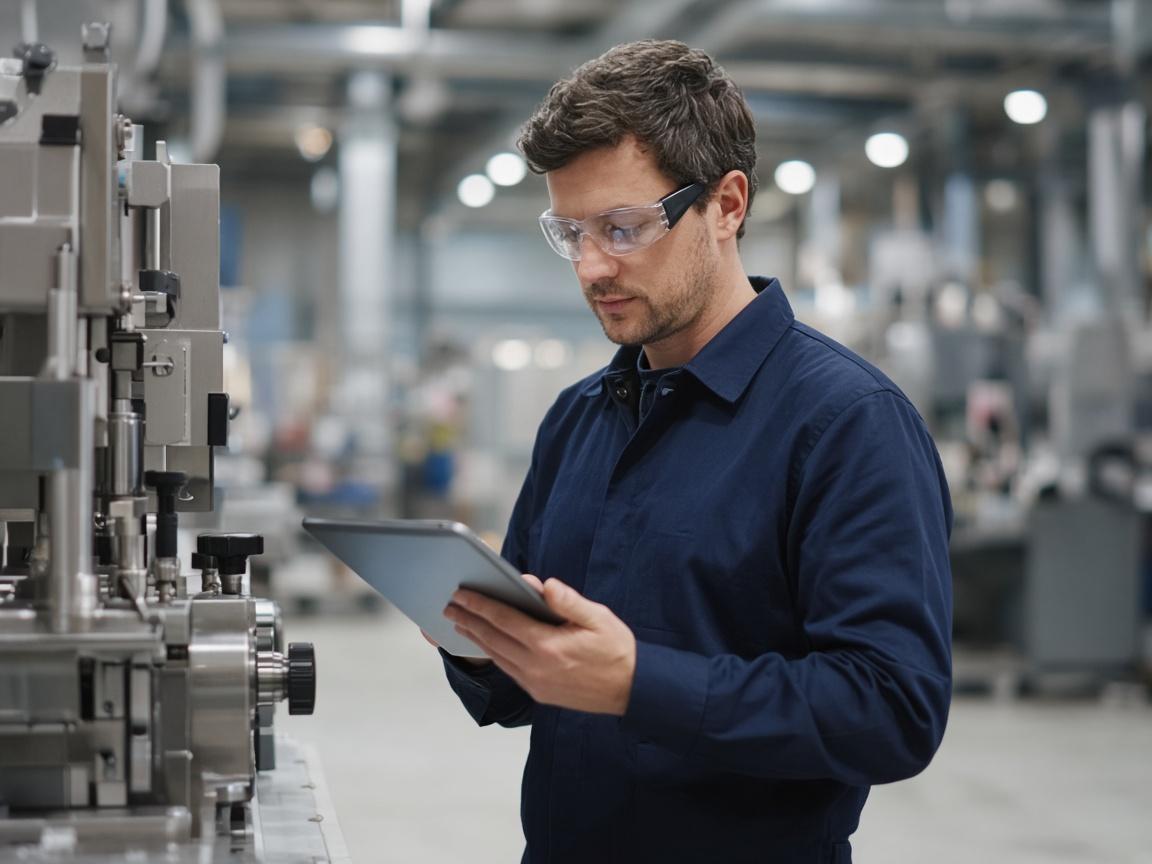
Shop-floor intelligence fails when it is built like a cloud app. We place models where latency and connectivity demand, keep OT networks isolated, and make every alert something a supervisor can verify.
Sources
- SCADA
- MES
- ERP
- Quality
- 01
OT & IT context
Sensors, historians, and work orders joined without exposing the control network.
- 02
Intelligence
Failure prediction, vision QA, and scheduling models with an edge or cloud split you can defend.
- 03
Action
Work orders, holds, and spare-parts signals into the systems maintenance already uses.
- 04
Reliability
Alert quality monitoring so the floor does not learn to ignore the model.
Why it matters
Why industrial AI is an operations problem
A clever model that cries wolf will be muted. A silent one will be blamed after the breakdown. Both are design failures.
Uptime you can plan
Predictions land as maintenance work, not as a chart, with enough lead time to schedule parts and labor.
Quality at the source
Vision and process checks catch drift on the line instead of at the customer.
OT-safe integration
Read from the floor without writing unsafely to control systems. Isolation is a requirement, not a slide.
How it works
Sense, predict, and act on the line
- 01
Sense
Bring telemetry, quality, and production events into a picture the model and the supervisor share.
- 02
Predict
Flag degradation, yield drift, and material risk early enough to plan, not scramble.
- 03
Act
Open the work order, hold the lot, or resequence — with a person in the loop when safety requires it.
In production
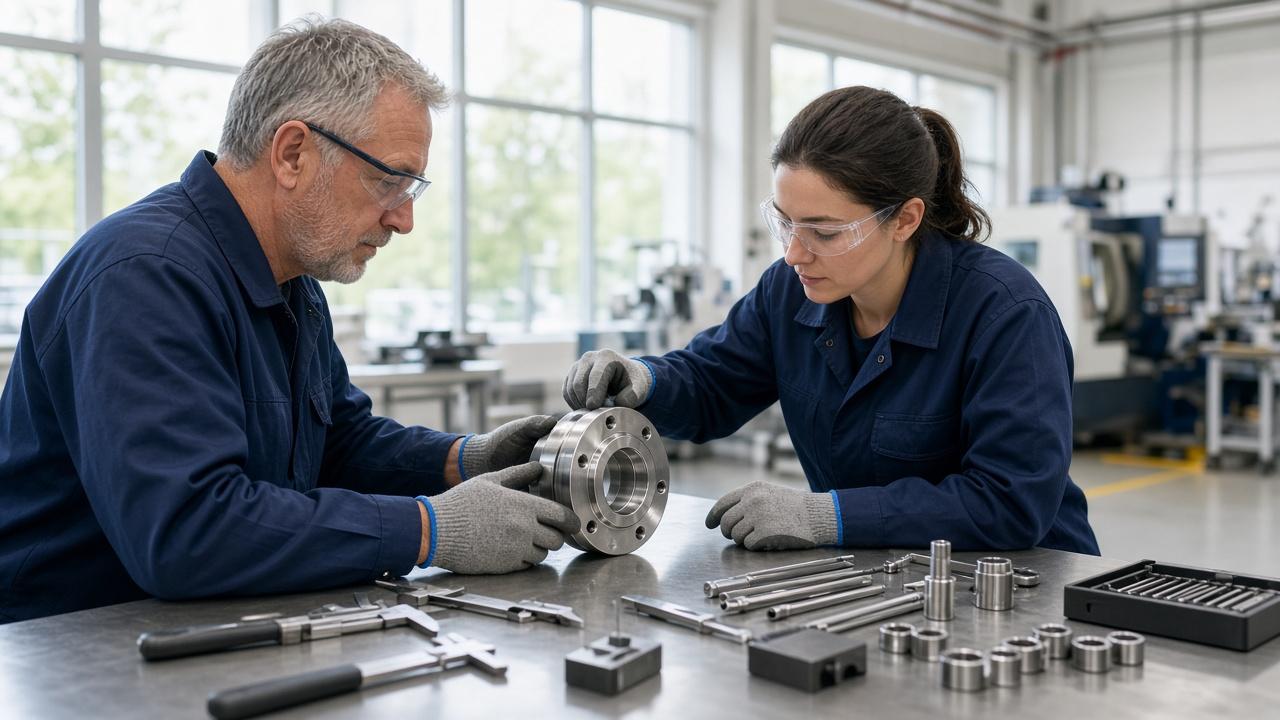
What production industrial AI actually does
How the system behaves when it is live — not in a demo.
- 01
How it works
Signals from the line become a recommendation the CMMS or MES can take.
- Ingests telemetry and quality events at the cadence the process needs.
- Scores health, yield, or schedule risk with an explainable threshold.
- Opens or updates work in the system maintenance already lives in.
- 02
Why it is different
This is not a historian with a prettier chart.
- Edge vs cloud is chosen per latency and connectivity, not fashion.
- Alert precision is monitored like a production KPI.
- Safety-critical actuation stays human-gated.
- 03
Why it matters
The plant responds before the stoppage, not after the postmortem.
- Maintenance moves from calendar to condition.
- Quality issues shrink to the lot, not the week.
- Planners see material and machine risk in one view.
The challenge
What manufacturing teams are fighting
Predictive maintenance, process automation, and supply chain intelligence that reduce downtime and improve operational efficiency.
- 01
Downtime as a surprise
Failures are still discovered by the operator, not by the signal that was already in the historian.
- 02
OT/IT gaps
The data exists. Getting it out safely, on time, and in a model-usable shape is the project.
- 03
Alert fatigue
Previous ‘AI’ tools paged everyone. Trust collapsed. The next system has to earn it back.
- 04
Multi-site variance
The same asset class behaves differently by line, mix, and crew — models have to be allowed to specialize.
Put it to work
What we build for Manufacturing
Floor and planning capabilities we deploy as a system — not as disconnected dashboards.
Predictive maintenance
Health scores and remaining-useful-life signals tied to work orders and spare parts.
- Health
- Work orders
- Parts
Quality monitoring
Vision and process anomaly detection with hold-and-review paths for suspect lots.
- Inspection
- Holds
- Traceability
Production scheduling
Constraint-aware sequencing that absorbs machine, material, and labor reality.
- Sequences
- Constraints
- What-ifs
Supply & parts intelligence
Risk on inbound material and spares so a predicted failure is not blocked by a missing part.
- Risk
- Lead times
- Buffers
Energy & utilities
Load and anomaly views that operations can act on without a separate energy silo.
- Load
- Anomalies
- Targets
Digital twin support
Operational models for what-if and training — grounded in live tags, not a slideware twin.
- State
- Simulation
- Handoff
Manufacturing
The work Manufacturing teams run
Predictive maintenance, process automation, and supply chain intelligence that reduce downtime and improve operational efficiency.
- 01
Predictive Maintenance
- 02
Process Automation
- 03
Supply Chain Intelligence
- 04
Quality Monitoring
- 05
Production Scheduling Optimization
- 06
Equipment Failure Prediction
- 07
Inventory & Parts Management
- 08
Safety Compliance Monitoring
- 09
Energy Usage Optimization
- 10
Digital Twin Systems
Reliability
Condition-based maintenance
Predictions that become work orders, not another unused score.
Quality & flow
Holds and routing without paperwork lag
Suspect lots and changeovers moved through governed workflows.
OT/IT
Data out of the island
Historians, MES, and ERP connected without unsafe write-back to control.
Know-how
Procedures when the expert is off-shift
Retrieval over SOPs, PMs, and past work orders with citations.
Earn trust on the floor
Alerts a supervisor will still pick up on night shift
Industrial AI dies from ignored alarms. We tune thresholds with maintenance, attach evidence, and measure precision after launch so the system stays in the operating rhythm instead of the graveyard of unused dashboards.
- Evidence attached to every alert — trend, similar failures, recommended check
- Human gate on anything that could affect safety or control
- Precision and mute-rate monitored like production KPIs
System flow
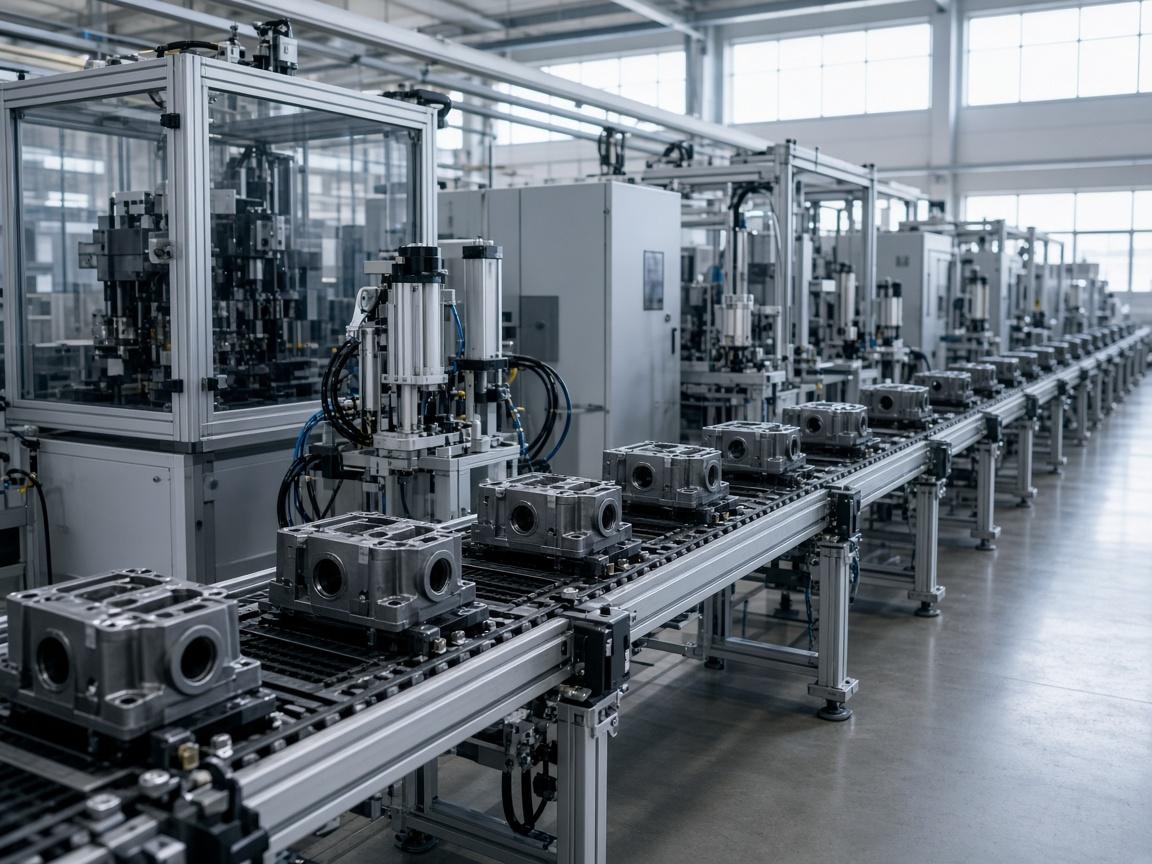
How we engineer for manufacturing
- Assess operations
- Connect data sources
- Predict & automate
- Integrate with floor systems
- Monitor outcomes
The outcome
More uptime, clearer visibility, and operations that respond before problems escalate.
What changes for the teams that run this work every day.
Calendar-based PMs and surprise failures
Condition-based work with evidence
Quality found at the customer
Holds at the station
Tribal knowledge on one technician
Procedures retrievable on the floor
Under the hood
Industry-specific AI / ML
Shop-floor intelligence: predictive maintenance, vision QA, and supply signals.
- 01
Predictive maintenance from sensors, SCADA, and history
- 02
Computer vision for quality inspection where visuals matter
- 03
Scheduling, yield, and parts forecasting with ERP/MES data
- 04
Anomaly detection on lines, energy, and safety telemetry
Production & governance
- 01
Edge vs cloud matched to latency and connectivity
- 02
OT/IT integration without unsafe exposure
- 03
Escalation when models flag risk; retraining as mixes change
- 04
Reliability monitoring on prediction-driven alerts
How we deliver
A clear path from first conversation to production
- 01
Assess the line
Assets, failure modes, data reality, and who currently gets paged.
- 02
Connect safely
OT/IT patterns that read what they need and never write unsafely to control.
- 03
Prove on history
Would this have caught last quarter’s events without drowning the crew?
- 04
Operate with the shift
Launch into the CMMS/MES they already open, then tune alert quality live.
Technology
Tools and platforms we work with
We choose the simplest stack that fits the constraint — and work in yours where you already have one.
Python
PyTorch
PostgreSQL
Redis
FastAPI
AWS
Docker
TensorFlow
GitHub Actions
Kubernetes
Engagement outcome
What you receive
- Predictive or quality models tied to existing work systems
- OT/IT integration design and access boundaries
- Alert quality monitoring and evidence packs
- Edge vs cloud serving decision documented
- Runbook for maintenance, quality, and OT
Where it connects
Capabilities we draw on
- AI & IntelligenceGenerative AI, LLM applications, RAG, machine learning, and document intelligence engineered for production.
- Software EngineeringCustom web, mobile, API, and enterprise software engineering — reliable foundations for modern businesses.
- AI Agents & AutomationAI agents, workflow orchestration, and business process automation for email, voice, support, sales, and research.
FAQ
Questions we hear in this sector
Straight answers about how we work — without invented case results.
Will this write to PLCs or the DCS?
Not as a default. We read telemetry and act through MES/CMMS workflows. Any closed-loop control is a separate, safety-reviewed design.
What if connectivity to a site is poor?
We place inference at the edge where latency or links demand it, and sync summaries upstream. The floor should not depend on a WAN blip.
How do you avoid alert fatigue?
Thresholds set with the crew, evidence on every page, and precision tracked after launch. If mute-rate climbs, that is a defect we fix.
Can this start on one line?
Yes. We prefer a single asset class and a willing maintenance lead, then replicate the pattern site by site.
Keep exploring
Related industries



Ready to engineer this for Manufacturing?
Tell us about the operation, the constraint, and what production has to look like. We'll come back with an honest first increment — not a generic AI pitch.