
02Knowledge at Scale
Answers from everything your company knows.
We turn scattered documents, tickets, and systems into an assistant that finds the right information, answers in plain language, and shows where it came from — respecting who is allowed to see what.
- 7
- capabilities
- 4
- delivery stages
- 4
- industries served
How it works
Find. Ground. Answer.
- 01
Find
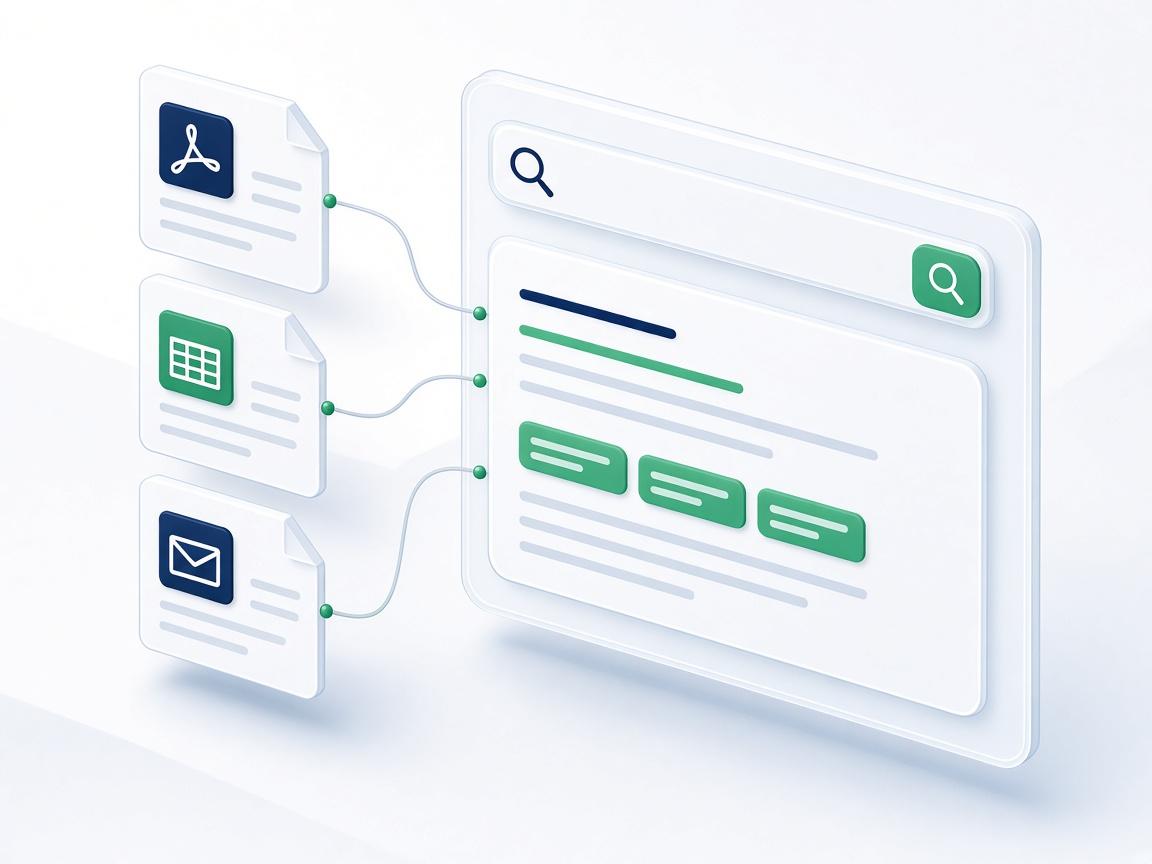
Hybrid semantic and keyword search across PDFs, wikis, tickets, and databases — filtered by metadata and permissions.
- 02
Ground
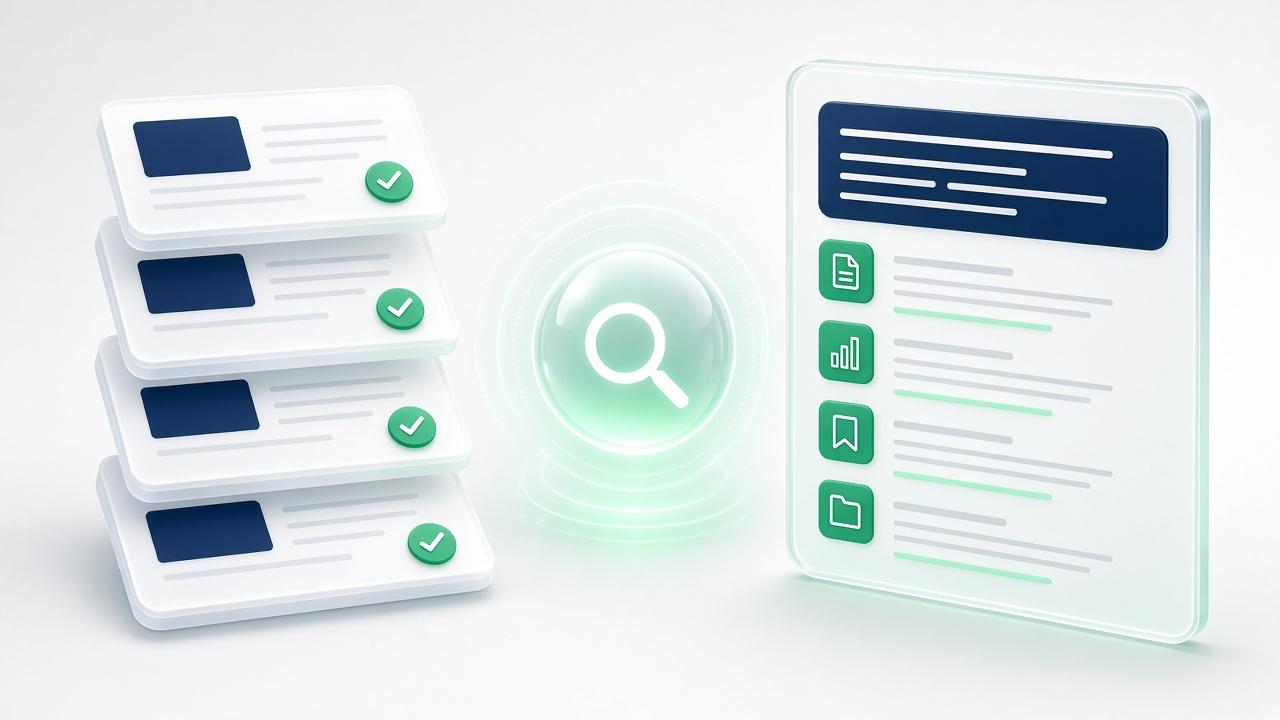
Answers are built from retrieved passages, so every claim can be traced to a source your team can open.
- 03
Answer
Clear, conversational responses with citations — and a refusal when the sources don't support an answer.
The challenge
Why knowledge is hard to use today
- 01
Information in PDFs and documents
Critical details sit in files that keyword search can't read or rank properly.
- 02
Knowledge that's hard to find
People know it exists somewhere but not where — so they ask a colleague instead.
- 03
The same questions, repeatedly
Experts spend hours answering what is already written down.
- 04
Knowledge trapped in systems
Answers span wikis, CRMs, and ticket history that don't talk to each other.
What we build
Knowledge at Scale, in practice
Seven building blocks for turning organizational knowledge into something people and systems can use.
RAG systems
Retrieval-augmented generation with chunking, embeddings, re-ranking, and grounding checks.
- Chunking
- Re-ranking
- Grounding
Enterprise knowledge assistants
Assistants that answer employee and customer questions with citations and access control.
- Citations
- Access control
- Refusal
Document Q&A
Ask questions of contracts, policies, and reports and jump straight to the source passage.
- Passage jump
- Citations
- Filters
Semantic search
Search that understands meaning, not just keywords, with filters, facets, and relevance tuning.
- Hybrid retrieval
- Facets
- Relevance
Knowledge bases
Structured, maintainable stores of approved content with ownership and freshness tracking.
- Ownership
- Freshness
- Governance
Internal AI assistants
Task-focused helpers for support, sales, HR, and operations, grounded in internal sources.
- Support
- Sales
- Operations
Retrieval pipelines
Ingestion and indexing pipelines that keep content current as documents change.
- Ingestion
- Refresh
- Metadata
Quality and access
Retrieval you can inspect and improve
Good answers come from good retrieval. We build the pipeline in stages we can measure, so when an answer is wrong you can see exactly which stage to fix.
- Document- and tenant-level access control; PII-aware pipelines
- Retrieval quality and grounding tested against your own question set
- Caching and scoped retrieval to keep latency and cost predictable
System flow
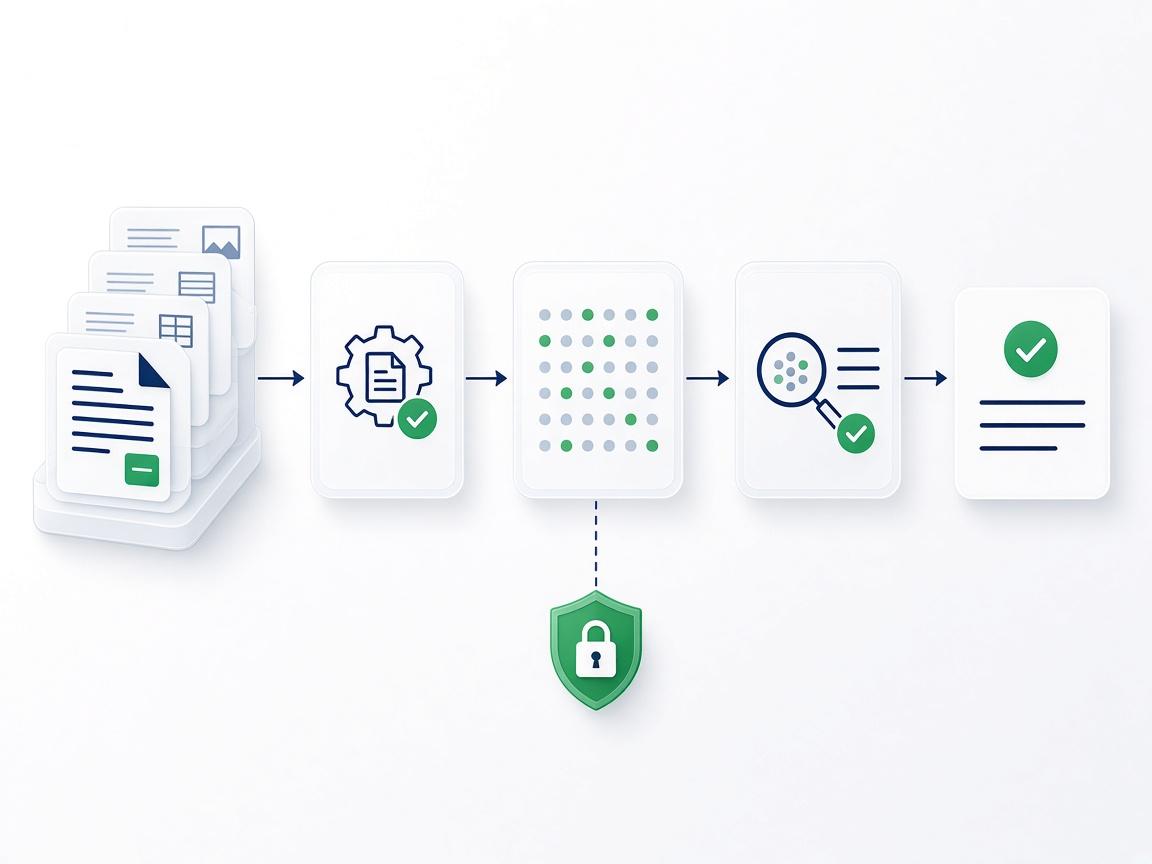
How the system works
- Documents / Data
- Ingestion
- Chunking
- Embeddings
- Retrieval
- Context
- LLM
- Response
The outcome
Turn organizational knowledge into an accessible, intelligent system.
What changes for the teams that rely on it.
Searching across five tools
One question, one sourced answer
Experts answering repeat questions
Self-serve answers with citations
Knowledge that goes stale in files
Indexes that update as content changes
Under the hood
AI / ML capabilities
We choose rules, classical ML, deep learning, LLMs, RAG, or agents based on the problem, data, and reliability needs—not hype. Software, data, and ML engineers on one team.
- 01
Production RAG: ingestion, chunking, embeddings, re-ranking
- 02
Hybrid semantic + keyword search with metadata filters
- 03
Grounded answers with citations; refuse when context is insufficient
- 04
Multi-format document intelligence and model routing when needed
Evaluation, security & production
- 01
Retrieval quality, grounding, and hallucination regression tests
- 02
Document- and tenant-level access control; PII-aware pipelines
- 03
Latency and cost controls: caching, batching, scoped retrieval
- 04
User feedback loops and monitoring in live environments
How we deliver
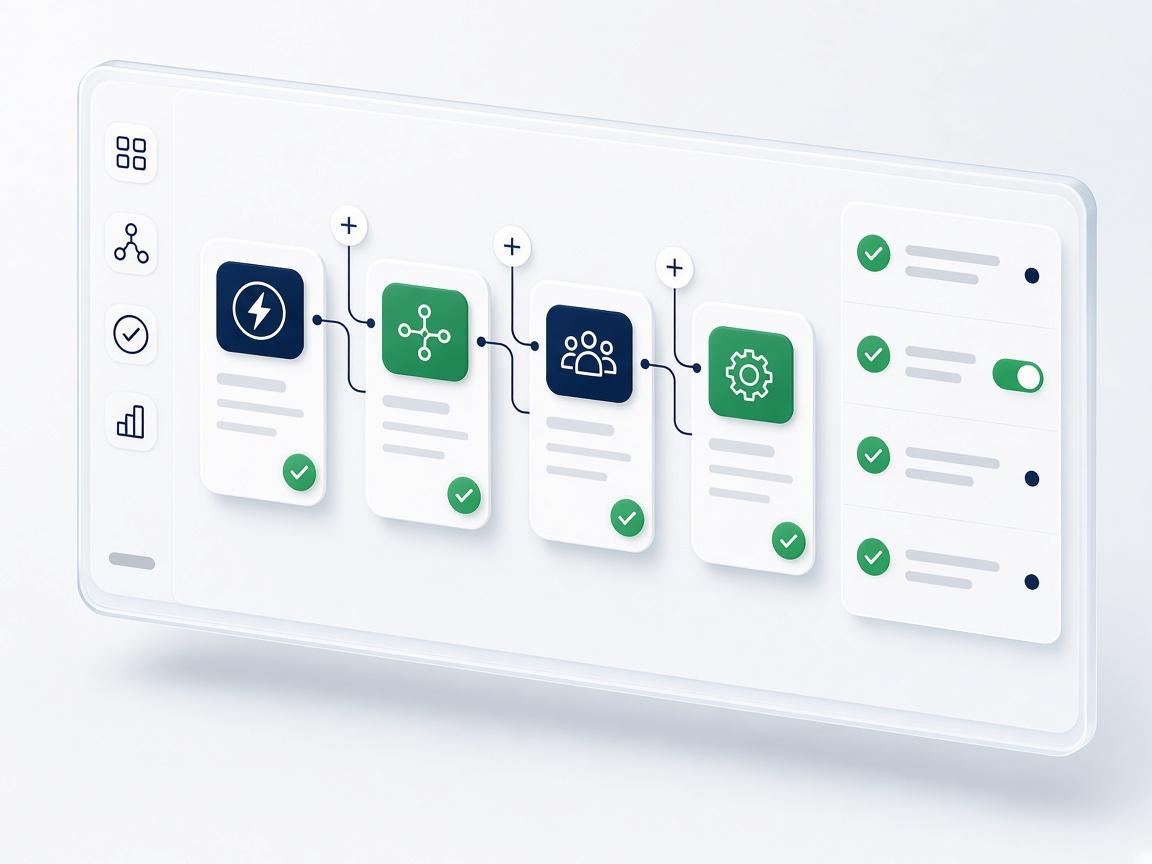
A clear path from first call to production
- 01
Audit the sources
Identify what knowledge exists, where it lives, who owns it, and who may see it.
- 02
Build the pipeline
Ingest, clean, chunk, and index content with metadata and permissions preserved.
- 03
Evaluate answers
Test retrieval and responses against real questions until they meet the agreed bar.
- 04
Launch & learn
Release with feedback capture and monitoring, then tune from real usage.
Technology
Tools and platforms we work with
We choose the simplest technology that fits the problem — and work in your stack where you have one.
OpenAI
Anthropic
LlamaIndex
LangChain
Pinecone
Weaviate
PostgreSQL
Python
Hugging Face
AWS
Engagement outcome
What you receive
- A working assistant or search experience over your content
- Ingestion pipelines with scheduled refresh
- Evaluation set and quality baseline for answers
- Access control mapped to your existing permissions
- Documentation of sources, models, and data flows
Where it applies
Industries and capabilities




- AI & IntelligenceGenerative AI, LLM applications, RAG, machine learning, and document intelligence engineered for production.
- Software EngineeringCustom web, mobile, API, and enterprise software engineering — reliable foundations for modern businesses.
- Products & InfrastructureSaaS product development, cloud architecture, DevOps, monitoring, and security engineering for production systems.
FAQ
Questions we hear most
Straight answers about how we work on this kind of project.
How do you prevent made-up answers?
Answers are generated from retrieved passages and cited. We test against an agreed question set and configure the system to decline when the sources don't contain the answer.
Will it respect document permissions?
Yes. Access rules are carried into the index and applied at query time, so people only get answers from content they are allowed to see.
Can it work with our private data and models?
We design around your privacy requirements — including private deployments and providers that don't train on your data — and document where data flows.
How do we keep content up to date?
Ingestion pipelines refresh on a schedule or on change events, and content has owners and freshness tracking so stale material is flagged.
Keep exploring
More solutions
Ready to start with Knowledge at Scale?
Tell us about the problem. We'll come back with an honest view of the right approach, and what a first increment looks like.